
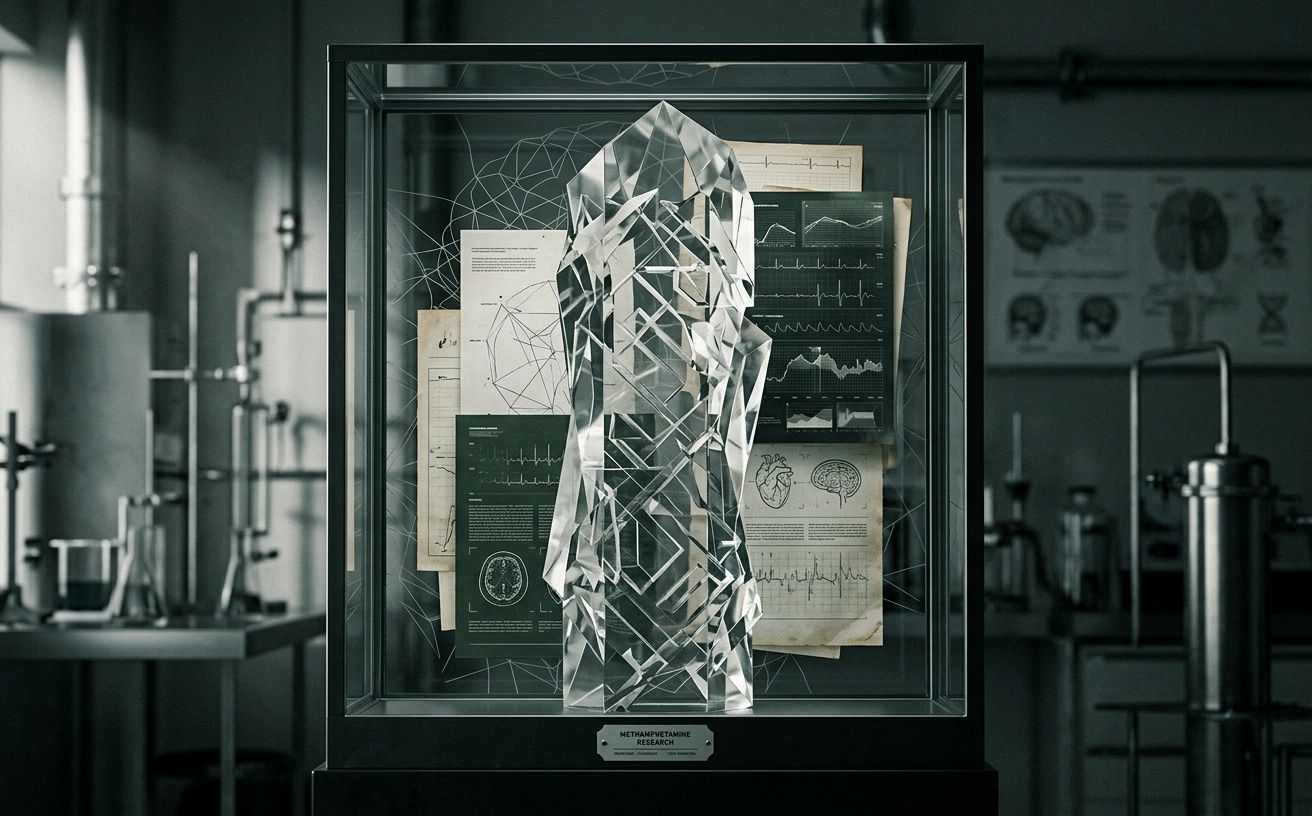
Methamphetamine is a powerful stimulant with a long duration of action. “Crystal meth” usually refers to a crystalline form of the same drug. The distinction matters less medically than the pattern of use: repeated doses, long periods without sleep and rapid development of compulsive use can turn an acute stimulant effect into a much more complicated health problem.
In Britain, methamphetamine is encountered less commonly than cocaine in general population surveys, but its potential harms are well established. It is a Class A controlled drug.
Why methamphetamine is different from an ordinary stimulant
Methamphetamine increases activity in dopamine and noradrenaline systems and can produce wakefulness, energy, confidence and intense reinforcement. Its effects may persist far longer than a short-acting stimulant.
That duration has consequences. A person can remain awake and physiologically stimulated for extended periods, then take additional doses before the earlier effects have fully resolved.
Sleep loss becomes part of the drug effect rather than a separate inconvenience.
Short-term physical risks
Heart rate, blood pressure and body temperature may rise. Appetite commonly falls. Jaw tension, sweating, tremor and agitation can occur.
More serious complications can include dangerous overheating, abnormal heart rhythms, chest pain, seizures and stroke. Stimulant toxicity does not require a person to lose consciousness; someone may instead be extremely agitated, confused or physically overactive while becoming medically unstable.
See our guide to crystal methamphetamine effects for a closer look at acute stimulant toxicity.
Sleep deprivation can become a major part of the risk
Long periods without restorative sleep can change thinking and behaviour on their own. When combined with a potent stimulant, suspiciousness, anxiety and perceptual disturbances may become more pronounced.
A person who has been awake for a prolonged period may find it difficult to separate drug effects, exhaustion and emerging psychotic symptoms.
This helps explain why the safest response to severe paranoia is not always simply to wait for the stimulant to wear off. If the person cannot be kept safe, is severely agitated or remains psychotic, professional assessment is appropriate.
Methamphetamine and psychosis
Paranoid ideas, hallucinations and severe agitation can occur during heavy methamphetamine use. Symptoms may resolve after intoxication and sleep, but they can also persist in some people.
The risk is not identical for everyone. Dose, frequency, sleep loss, previous psychiatric vulnerability and other drugs all matter.
Persistent hallucinations, delusional beliefs or dangerous behaviour should not be normalised as an expected part of a stimulant session.
Why dependence can develop quickly
Methamphetamine is strongly reinforcing. Some people move from occasional use to repeated or prolonged sessions, with craving and loss of control becoming central features.
Dependence is not defined by appearance, employment status or whether the person uses every day. More useful signs include repeated failed attempts to stop, increasing priority given to the drug, continued use despite harm and spending substantial time obtaining, using or recovering from it.
Our guide to methamphetamine dependence looks at these patterns in more detail.
The crash and withdrawal
After prolonged stimulation, profound fatigue can follow. Sleep may increase sharply. Low mood, irritability, reduced motivation and craving can persist beyond the immediate crash.
Depression can become clinically significant, particularly after heavy use. Suicidal thinking requires urgent support regardless of whether it appears to be “just withdrawal”.
There is no single home detoxification schedule that fits everyone. People with heavy use, severe depression, psychosis or multiple-drug use may need specialist support.
Longer-term physical health
Repeated methamphetamine use can affect cardiovascular health, nutrition, oral health and skin. Weight loss may reflect appetite suppression, disrupted routine and long periods of wakefulness rather than a simple direct effect on metabolism.
Dental problems associated with chronic stimulant use have several contributors, including dry mouth, reduced oral hygiene, dietary changes and teeth grinding. The popular image of “meth mouth” can be stigmatising if it is treated as a diagnostic sign. Dental appearance cannot tell you with certainty whether someone uses methamphetamine.
Unregulated crystal does not have a standard strength
Crystal shape, transparency or colour cannot confirm purity. An illicit sample may contain methamphetamine at an uncertain concentration, another stimulant or additional substances.
This is particularly important when someone assumes that clearer crystals are necessarily “cleaner”. Visual appearance is not an analytical test.
See why crystal methamphetamine cannot be identified reliably by appearance.
UK legal position
Methamphetamine — also referred to in UK legislation as methylamphetamine — is a Class A controlled drug.
The government reclassified methylamphetamine to Class A in 2007. Current GOV.UK guidance continues to list methamphetamine, including crystal meth, among Class A drugs.
Unauthorised possession can carry a maximum penalty of seven years in prison, an unlimited fine, or both. Supply and production can carry up to life imprisonment, an unlimited fine, or both.
See crystal methamphetamine law in the UK.
When the situation is an emergency
Call 999 for severe chest pain, seizure, collapse, severe overheating, loss of consciousness, stroke-like symptoms or agitation so extreme that the person cannot be kept safe.
Severe paranoia or psychosis also warrants urgent assessment when there is an immediate risk to the person or others.

